How to set up a small balcony for growing cooking herbs
· Editorial team denvernewsdaily24.com
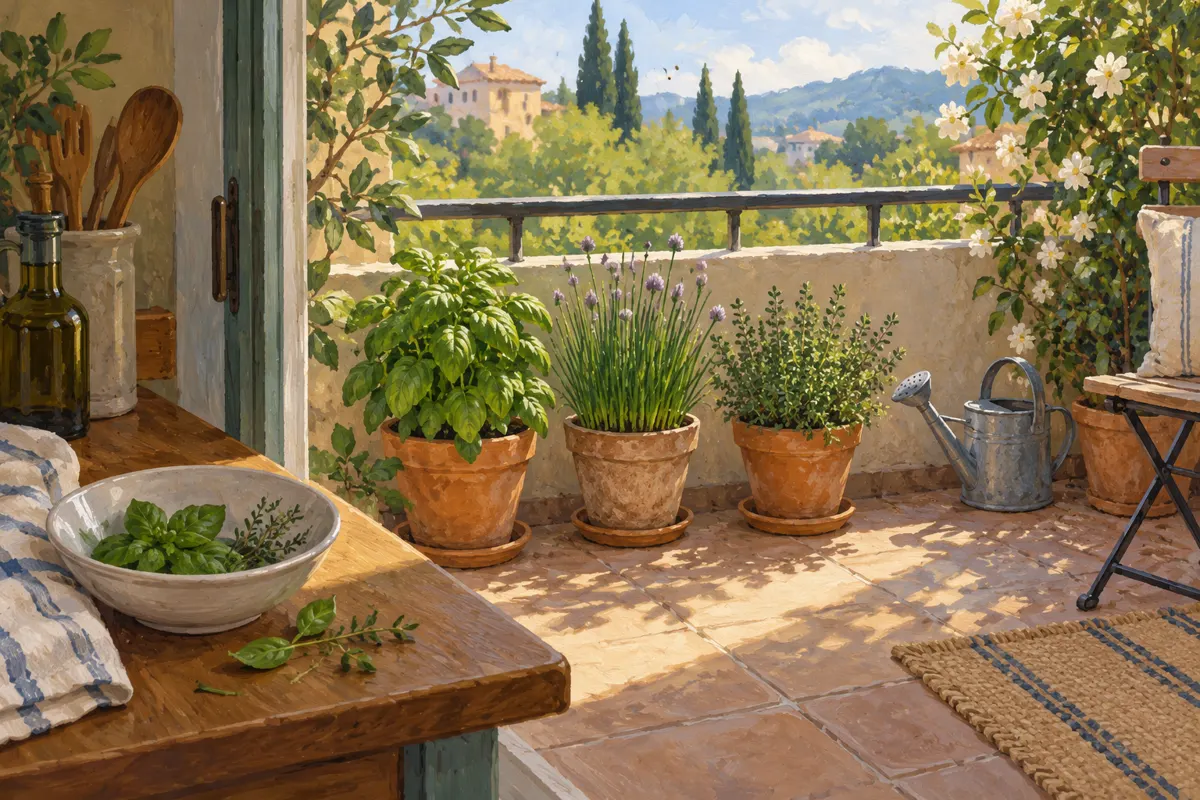
Start with three herbs you regularly cook with, each in its own container with drainage holes and potting mix. Choose them after observing sunlight where the pots will sit. Keep the containers easy to reach, check their moisture separately, and make small harvests part of preparing meals. This proposed setup gives an apartment cook a manageable starting point without filling the balcony.
Count sunlight where the pots will sit
Before buying plants, watch the balcony through a day and note when direct sun reaches each possible container position. Check the actual shelf or floor spot: an overhead balcony or nearby wall may shade it even when the railing is sunny. Repeat the observation if the first day is too cloudy to tell.
Use the result to narrow your choices. Farm to Jar recommends six or more hours of sun for herbs such as basil and rosemary, and suggests parsley, chives, mint, or lemon balm when there are fewer than six. Plants Not Plastic offers a broader four-hour guideline. Treat these as starting points, and check the needs of the particular plant you buy; a lower-light recommendation does not mean an herb will thrive in deep shade.
Notice wind as well as light. Exposed railing containers can dry quickly in sun and wind. Your proposed location should let you inspect the soil and reach every plant comfortably, so routine care remains easy.
Choose three herbs for the meals you make
Look at the meals you make most often and the herbs you repeatedly buy. Give your three spaces to flavors you will use. If you rarely cook with rosemary, its familiar appearance is a weak reason to choose it over chives you would snip into eggs or potatoes each week.
- For a sunny balcony: basil, thyme, and chives, each in a separate pot.
- For a position with fewer sun hours: parsley, chives, and mint, provided each plant’s light requirements can still be met.
- For frequent roast dinners: thyme, rosemary, and parsley, with rosemary reserved for a sufficiently sunny position.
One herb per container is the proposed starting arrangement. It lets you water each plant according to its needs and move it independently. Thyme and rosemary prefer drier conditions than soft-stemmed herbs such as parsley and basil. Keep mint in its own pot: its spreading roots can take over a shared planting.
Arrange containers around light, drainage, and access
The essential supplies are three suitable containers with drainage holes, potting mix, healthy plants, and a way to water them. Add saucers where needed to manage runoff. Use a container potting mix rather than soil dug from a garden, and select pots with room for the chosen herbs to grow. Ask about the plant’s eventual size before committing to a tiny decorative pot.
A proposed layout is a short row along a sunny balcony edge, leaving the door and walking route clear. Where floor space is especially tight, a sturdy shelf can make plants accessible, provided the upper containers do not shade the lower ones. Test the arrangement with empty pots first and check that you can reach each one with a watering can.
If you choose railing planters, measure the rail and check the planter’s mounting requirements and your building’s rules. Wet potting mix adds weight, so the support matters. Plan where drainage water will go, including its effect on neighbors below. A convenient position must also be secure and practical to water.
Plant healthy seedlings with room to grow
Established seedlings offer a straightforward beginning. Look for healthy foliage without rotting leaves or visible mold, and ask whether the plants are ready for outdoor conditions. Starting from seed is another option, but it adds a germination stage before you have herbs available for cooking.
- Place the empty containers in your chosen arrangement and confirm that their drainage holes are clear.
- Add potting mix, leaving space for the seedling’s root ball.
- Ease the plant out of its nursery container by loosening the container rather than pulling hard on the stems.
- Set it in place and fill gently around the root ball. Leave about half an inch below the rim for watering.
- Water thoroughly and allow excess water to drain, managing runoff so it does not spill onto the balcony below.
Build a moisture-check and harvesting routine
Make checking the pots a brief daily habit in summer, perhaps before preparing dinner. Check the potting mix in each container rather than watering all three automatically. The sources distinguish moisture-preferring herbs from those that favor drier soil, so the same watering schedule will not suit every plant.
When a plant needs water, water thoroughly enough for some to leave the drainage holes. Small pots and exposed railing boxes may need more frequent attention. Inspect foliage during these checks for visible pests or changes in condition; a struggling plant needs assessment before you assume more water is the answer.
Harvest small amounts as meals require them, following the cutting guidance for each herb. Regular snipping can encourage bushier growth, but a newly planted seedling should not be expected to supply a large recipe immediately. If you repeatedly leave one herb untouched, consider replacing it with something more useful when you next refresh the planting.
Plan for seasonal changes, too. A successful summer container does not establish that an herb will survive winter outdoors. Farm to Jar recommends bringing rosemary and bay indoors in cold climates. For a Denver balcony, the supplied sources do not establish local frost dates or reliable outdoor overwintering methods; obtain plant-specific local guidance before deciding what stays outside.
Questions and answers
Can all three herbs share one planter?
They can if their light and watering needs are compatible and there is enough growing room. Separate pots make individual care easier for beginners. Keep mint in its own container because it spreads strongly.
Should I water balcony herbs every day?
Check moisture daily in summer, but water according to each plant’s needs. Daily checking is especially useful for containers exposed to sun and wind; it does not mean every pot needs water every day.