How to pack a picnic for a walk without carrying a cooler
· Editorial team denvernewsdaily24.com
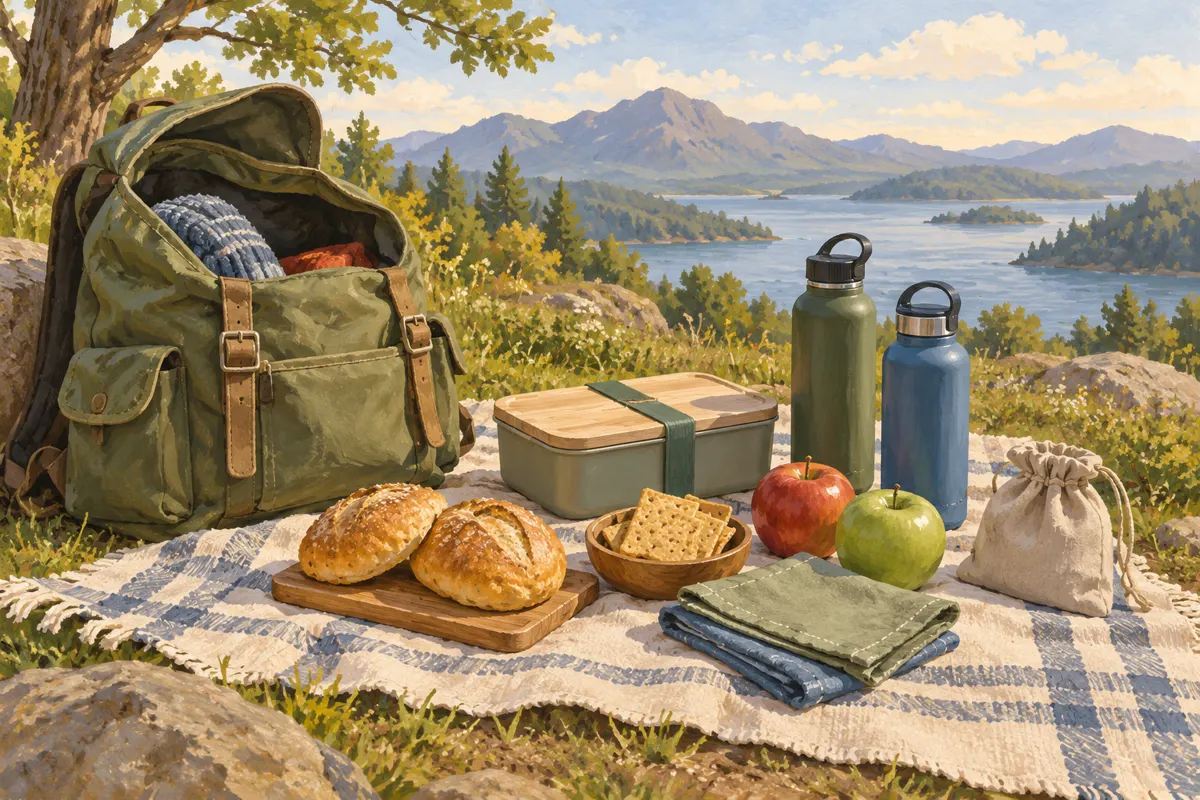
For a walking picnic without a cooler, pack foods that do not need refrigeration: bread or crackers, shelf-stable spreads, whole fruit, nuts, and water. Keep fragile food in a rigid container, bring only what two people will eat, and include a sealed bag for scraps. A small backpack can hold the meal and leave your hands free for the walk.
Choose food that can travel without chilling
Build the menu around food intended for storage at room temperature. Check package instructions, including what changes after opening. Food that tastes good cold does not necessarily travel safely without refrigeration. If an ingredient requires chilling, save it for an outing with suitable cold storage.
For this picnic, leave refrigerated sandwich fillings, prepared salads, and chilled dips at home. Choose unopened shelf-stable portions when practical, and open them when you sit down. Whole fruit keeps preparation simple; wash and dry it before packing. Avoid chocolate and other foods that become messy when warm.
Keep the meal small enough to finish at the stop. That reduces both carrying weight and the problem of bringing opened leftovers home. Water deserves space in the bag before optional treats do.
Pick one compact combination for two
These editorial proposals use a simple pattern: one bread or cracker base, one substantial accompaniment, fruit, and an optional sweet bite. Adjust portions to your appetite and the length of the outing, and check each product’s storage label.
- Bread-and-spread picnic: sturdy rolls, unopened shelf-stable nut or seed butter portions, two apples, and a small packet of plain cookies.
- Crunchy picnic: crackers in a rigid box, roasted chickpeas, two oranges, and dried fruit in a reusable container.
- Simple sandwich picnic: nut or seed butter sandwiches made with ingredients suitable for room-temperature storage, whole fruit, and a small portion of nuts.
Choose foods both walkers enjoy and account for allergies before packing. Keep spreads separate if you prefer to assemble the meal at the stop. Crackers and cookies should have their own compartment so they stay dry and do not pick up crumbs from everything else.
Pack so lunch survives the walk
Use a backpack that fits the food without forcing the lid shut. A rigid lunch box protects bread, crackers, and cookies; small containers keep loose snacks together. Skip bulky serving equipment by choosing food you can eat from its container or a napkin.
- Put filled water bottles upright in secure pockets or close to your back.
- Place the rigid food box above heavy items, with bread protected inside rather than loose under a bottle.
- Keep whole fruit separate from fragile snacks and secure it so it cannot roll around.
- Put napkins, the sitting cloth, and the cleanup bag near the top for easy access.
- Close the backpack and try it on before leaving; repack anything that shifts or presses uncomfortably.
Use a short checklist before leaving
A walking picnic needs few extras. The following editorial checklist covers eating, sitting, and cleanup without turning a short outing into a heavy load.
- Food for two, with storage instructions checked.
- Water for each person, allowing for the route and weather.
- One protective lunch box and small snack containers as needed.
- Two napkins and any utensil the chosen food actually requires.
- A lightweight sitting cloth if you plan to stop on the ground.
- Hand-cleaning supplies for the stop.
- A sealable scrap bag and a separate bag for dirty reusable items.
Choose an eating stop that suits the walk: somewhere you can sit comfortably and keep your belongings together. Pack easy-open food so lunch does not depend on remembering a knife or opener.
Carry every scrap back with you
Open the scrap bag as soon as you unpack lunch. Put wrappers, fruit peels, cores, and crumbs into it as you eat. Food scraps belong in your cleanup plan alongside packaging; take everything you brought back with you.
Before standing up, close food containers, seal the scrap bag, and put used utensils and napkins together. Check beneath the sitting cloth and around your feet for small pieces of packaging. Repack the waste securely, then empty it into appropriate disposal at home and wash the reusable items.